


Blood Bank Refrigerators: Why They Matter and How to Choose the Right One
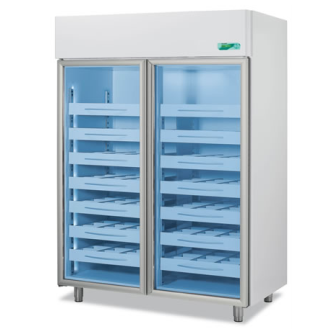
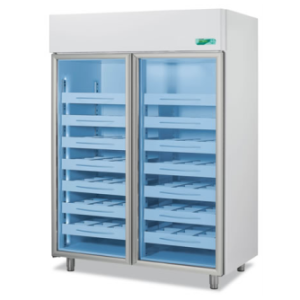
Blood is one of the few medical resources that cannot be manufactured — it can only be collected, protected, and used wisely. Blood bank refrigerators are the specialized appliances that make that possible, maintaining the precise temperature conditions needed to prevent bacterial contamination, avoid cell damage, and preserve the potency of donated blood from collection through to transfusion.
Why Precision, Not Just Refrigeration, Matters
Ordinary refrigeration doesn’t hold a temperature evenly. <cite index=”63-1″>Standard refrigeration systems often create temperature gradients, with warmer zones near the door and colder areas at the back — variability that is unacceptable for blood storage.</cite> A unit sitting near the door of a general-purpose fridge could easily drift outside a safe range without anyone noticing, simply because of where it happens to be shelved.
<cite index=”69-1″>International standards require whole blood and red blood cells to be stored between 1°C and 6°C.</cite> That narrow window isn’t arbitrary: <cite index=”69-1″>storage below 1°C risks hemolysis, the destruction of red blood cells, while temperatures above 6°C accelerate bacterial growth and shorten how long the unit stays viable.</cite> Purpose-built blood bank refrigerators solve the gradient problem with forced-air circulation, so every unit inside experiences the same tightly controlled environment regardless of where it sits.
Types of Blood Bank Refrigeration Equipment
Not every blood component needs the same storage conditions. The right equipment depends on what you’re storing:
Standard Blood Bank Refrigerators Used for whole blood and red blood cells, maintaining 2°C to 6°C with precise, continuous temperature control.
Platelet Storage Refrigerators Platelets need a very different environment — 20°C to 24°C — and typically include agitators to keep platelets from clumping while stored.
Plasma Freezers Preserve plasma’s coagulation factors at temperatures as low as -40°C or lower.
Cryopreservation Units Used for long-term storage of stem cells and rare blood types, reaching temperatures as low as -80°C with advanced insulation and monitoring.
Refrigerated Centrifuges Combine centrifugation and refrigeration in one unit, allowing blood components to be separated and immediately stored at the correct temperature without transferring them elsewhere first.
Monitoring Is the Whole Point
A blood bank refrigerator earns its name through what it tracks, not just what it cools. <cite index=”69-1″>Continuous temperature monitoring with alarm capabilities is required for all blood storage equipment, and activated alarms must be responded to around the clock — including weekends and holidays.</cite> <cite index=”68-1″>Improper temperature management is a leading cause of preventable blood product loss</cite>, and a compressor failure overnight can easily go unnoticed for hours if a facility relies only on manual, periodic checks. Equipment with an integrated event log — recording exactly when and at what temperature an alarm triggered — gives a lab both an early warning system and a documented compliance record.
Choosing the Right Blood Bank Refrigerator
A few practical factors should guide the decision, beyond brand and price:
- Storage capacity — assess current and projected inventory, with room for growth rather than sizing exactly to today’s volume
- Temperature control and uniformity — precise control within the required range, with forced-air circulation to avoid hot and cold spots
- Monitoring and alarm systems — continuous, automated monitoring with audible and remote alerts, not manual spot-checks alone
- Regulatory compliance — equipment that meets recognized standards (AABB, FDA, CE, or regional equivalents) relevant to your facility
- Energy efficiency — lower operating costs and reduced environmental impact over the equipment’s lifetime
- Space and layout — a model that fits the physical footprint of your blood bank or laboratory
- Local technical support and spare parts availability — a refrigerator with excellent specifications is only as good as your ability to get it serviced quickly when something goes wrong, which matters more in East Africa than in markets where these devices are typically designed
Biomedics Products Limited is a trusted distributor of reputable blood bank refrigeration brands, including Fiocchetti and Haier, giving hospitals and laboratories across Uganda access to equipment that meets international standards, backed by local support.
Maintenance Keeps the Investment Working
Once installed, ongoing maintenance is what keeps a blood bank refrigerator reliable:
- Scheduled temperature checks and calibration
- Cleaning and disinfection to prevent contamination
- Inspection of seals and gaskets to prevent temperature leaks
- Maintaining a log of temperature records and equipment servicing
The Bigger Picture
Blood donation depends on trust — donors trusting their contribution will help someone, and clinicians trusting that the unit they’re about to transfuse is exactly as safe as the moment it was collected. A well-maintained, properly monitored blood bank refrigerator is the quiet infrastructure that makes that trust possible.
Biomedics Products Limited supplies blood bank refrigerators and cold chain equipment — including Fiocchetti and Haier models — to hospitals and laboratories across Uganda, backed by local technical support. Explore our Blood Banking range or contact us to discuss the right storage solution for your facility.